
Most business owners think about data destruction the same way they think about trash pickup. Get a bin, schedule a truck, move on with the day. That works fine when the bin actually holds garbage. It stops working the moment those boxes hold customer financial records, employee files, patient intake forms, or the kind of proprietary business information that has to be secured.
At that point, destruction isn't a janitorial task anymore. It's a compliance control, and it's exactly the sort of thing a regulator, an auditor, or a plaintiff's attorney will ask pointed questions about if something ever goes wrong.
Companies covered by FACTA, GLBA, or a growing list of state privacy laws are expected to treat vendor selection for data disposal as a documented part of their security program. That covers a lot more small and mid-sized businesses than most owners assume.
Pick a vendor on price alone, and there's a real chance you've left a gap in that program without ever realizing it.
What Changes When Your Vendor Is Actually a Partner
Calling iSecure a compliance partner instead of a collection service isn't just a branding choice. It means destruction methods that are NAID AAA-audited rather than "we own a shredder and a truck." It means a documented chain of custody you can actually produce when someone asks for it, not a verbal assurance that everything was handled properly.
It also means every job comes with a Certificate of Destruction, so your compliance file has something concrete in it rather than a memory of a phone call. Honestly, that last part is where most of the value sits. Almost any vendor can send a truck and haul boxes away. Far fewer can hand you paperwork that would actually satisfy an auditor asking what happened to that data after it left your building.
Core Compliance Requirements Your Program Should Cover
If you're building or reviewing your organization's data disposal policy, here are the pillars a certified partner should help you satisfy:
| Requirement Area | Description & Best Practices | Key Regulation / Standard |
| Vendor Due Diligence | Your information security program must include documented due diligence on any vendor that touches sensitive data, including certifications, security controls, and a written service agreement. | GLBA Safeguards Rule (third-party oversight); Due Diligence Review is required by HIPAA |
| Disposal Standard | Paper and digital records must be rendered unreadable and unrecoverable. Cross-cut/micro-cut shredding meets this bar; cryptographic sanitization for digital data is the standard. | FACTA Disposal Rule / NIST SP 800-88 |
| Chain-of-Custody | Full tracking of materials and devices from collection through destruction, including serial numbers for digital assets. | Chain-of-Custody Audit Trail |
| State & Consumer Privacy Law | Many state privacy laws now impose their own secure-disposal and breach-notification requirements on top of federal rules. | State privacy statutes (e.g., Oregon ID Theft Protection Act; California CCPA-style laws) |
| Certification & Audit Trail | A Certificate of Destruction should be issued for every job, detailing date, materials, and method. Third-party audits of vendor personnel, procedures, and equipment. | NAID AAA Certification + Certificates of Destruction |
Make Sure Your Data is Compliant with iSecure!
The Real Cost of Prioritizing Price Over Credentials
A quote that's 20% cheaper looks appealing until you account for what an uncertified vendor typically can't provide: verifiable chain of custody, serial-number-level tracking of destroyed hard drives, third-party audited facilities, or a Certificate of Destruction that will actually satisfy an auditor or a regulator investigating a breach. When a disposal-related incident happens, "we used a shredding company" is not a defense. "We used a NAID AAA-certified partner and can produce the certificate" is.
iSecure provides each customer with a “customer portal” where this audit trail can be accessed 24/7 including historical service records, request new services and manage billing preferences and payments.
This is the difference between a vendor and a partner. A vendor removes a liability from your building. A partner de-escalates the risk that liability represents for your compliance standing, and for how much your customers trust you with their information in the first place.
How a Compliance-First Partnership Works
1. Assessment & Agreement
We start with an on-site or virtual assessment of what you're currently destroying, how, and how often, then put a written service agreement in place that names the standards we're held to.
2. Secure, Scheduled Collection
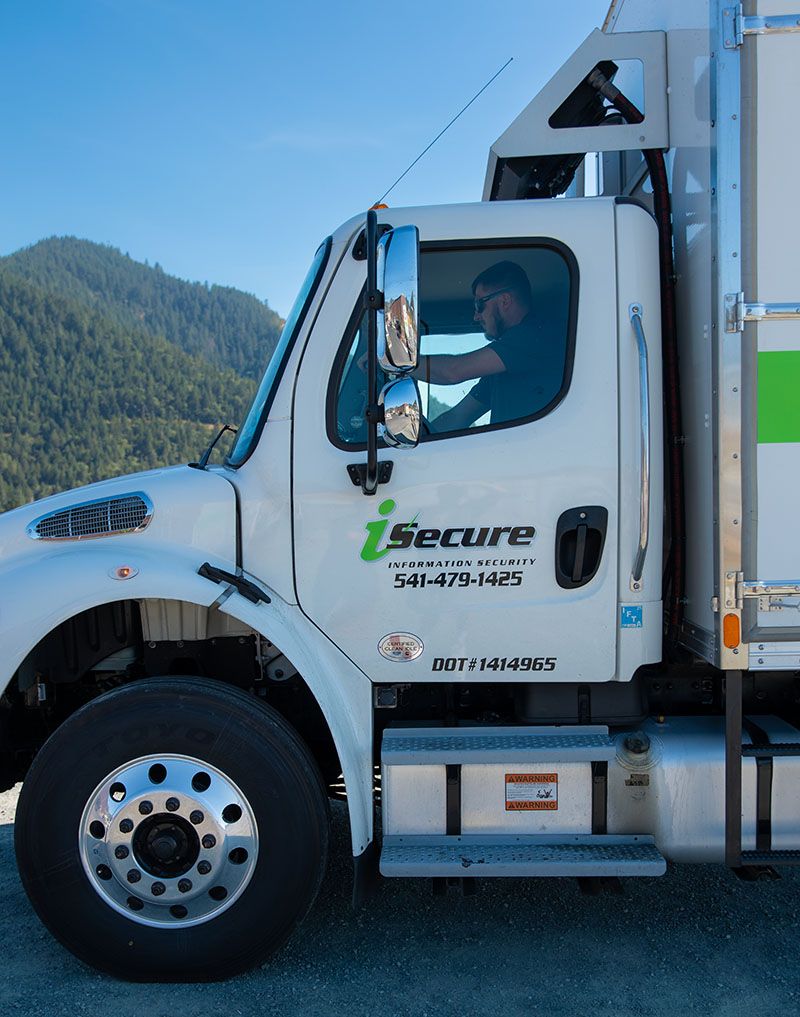
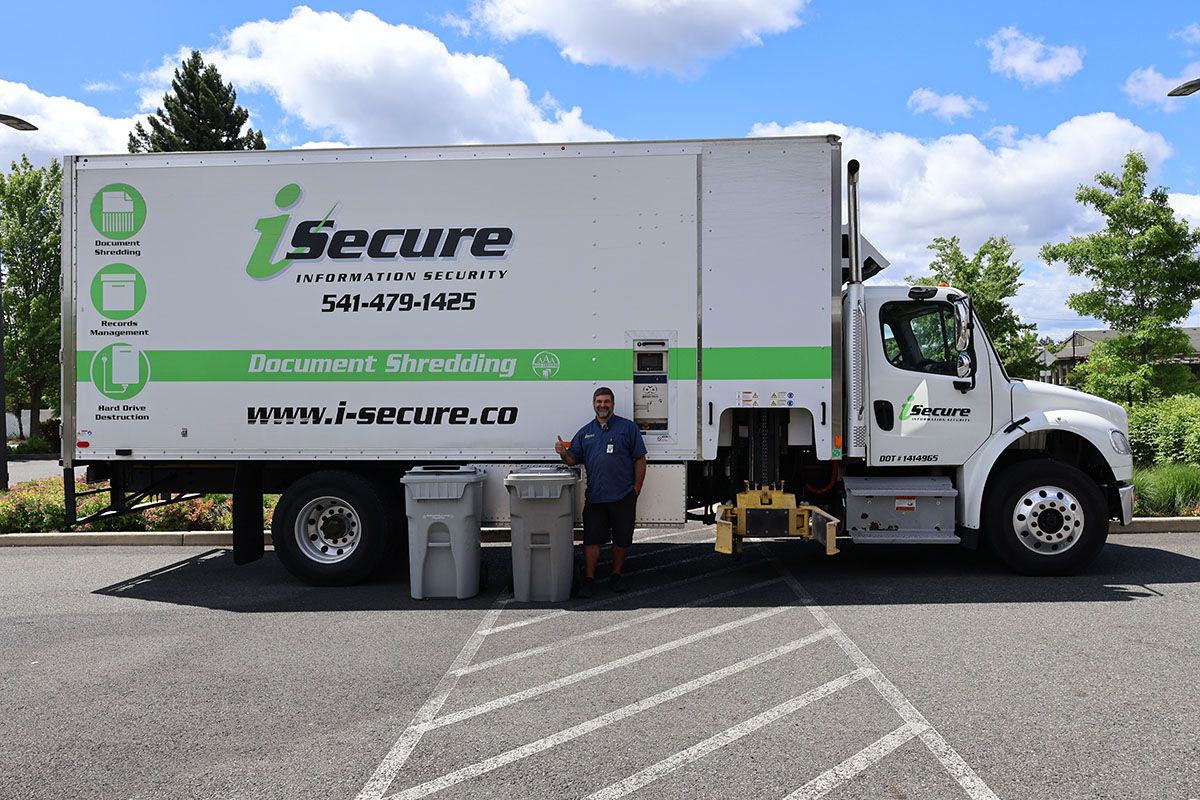
Locked containers and background-checked staff in marked vehicles keep custody clear from the moment materials leave your hands.
3. Certified Destruction
Paper is cross-cut shredded to NAID AAA particle specifications. Hard drives and digital media are destroyed or sanitized to NIST 800-88 standards, whichever your policy calls for.
4. Documentation You Can Hand an Auditor
Every job generates a Certificate of Destruction that lists the date, materials, method, and, for digital media, the serial numbers involved. It's filed and available any time you need it, not just when we remember to send it.
5. Ongoing Audit Support
As your compliance partner, we keep your destruction records organized and accessible so an audit is a formality instead of a scramble. As previously mentioned, iSecure provides each customer with a “customer portal” where this audit trail can be accessed 24/7 including historical service records, request new services and manage billing preferences and payments.
Why This Builds a Culture of Security, Not Just a Checklist
Customers and prospects increasingly ask vendors how their information is protected before they'll sign a contract. Being able to point to a documented, certified destruction program, rather than a verbal assurance, signals that information security is built into how your organization operates day to day. That tends to matter in a sales conversation or an insurance renewal just as much as it does in an actual audit.
None of this only matters when something goes wrong, either. A documented program keeps proprietary data, product designs, and old client records from surviving disposal in a recoverable form long after everyone involved has stopped thinking about them, which is the piece most owners underestimate until it's too late. It also gives you something more useful than an assurance to hand a nervous customer or an underwriter: an actual record they can look at.
A Partner, Not a Pickup
If your current process for sensitive documents and old hard drives amounts to "call whoever's cheapest," it's worth a second look. Not because price doesn't matter at all, but because the cheapest bin rental and a certified compliance program simply aren't the same purchase. iSecure has operated in Oregon and California as a NAID AAA-certified information security partner since 2006, helping businesses, nonprofits, and government agencies across Oregon and Northern California turn data destruction into audit-ready proof of a serious security program that actually holds up.
Ready to see how a compliance-first approach fits your organization?
Contact iSecure for a free on-site assessment and quote.

About the Author & iSecure Inc. Chris Isabell writes from iSecure, a certified information security company proudly based in Grants Pass, Oregon, since 2005. iSecure specializes in providing document destruction, hard drive destruction, IT asset disposal, recycling, and records management services to practices throughout Oregon and northern California.