
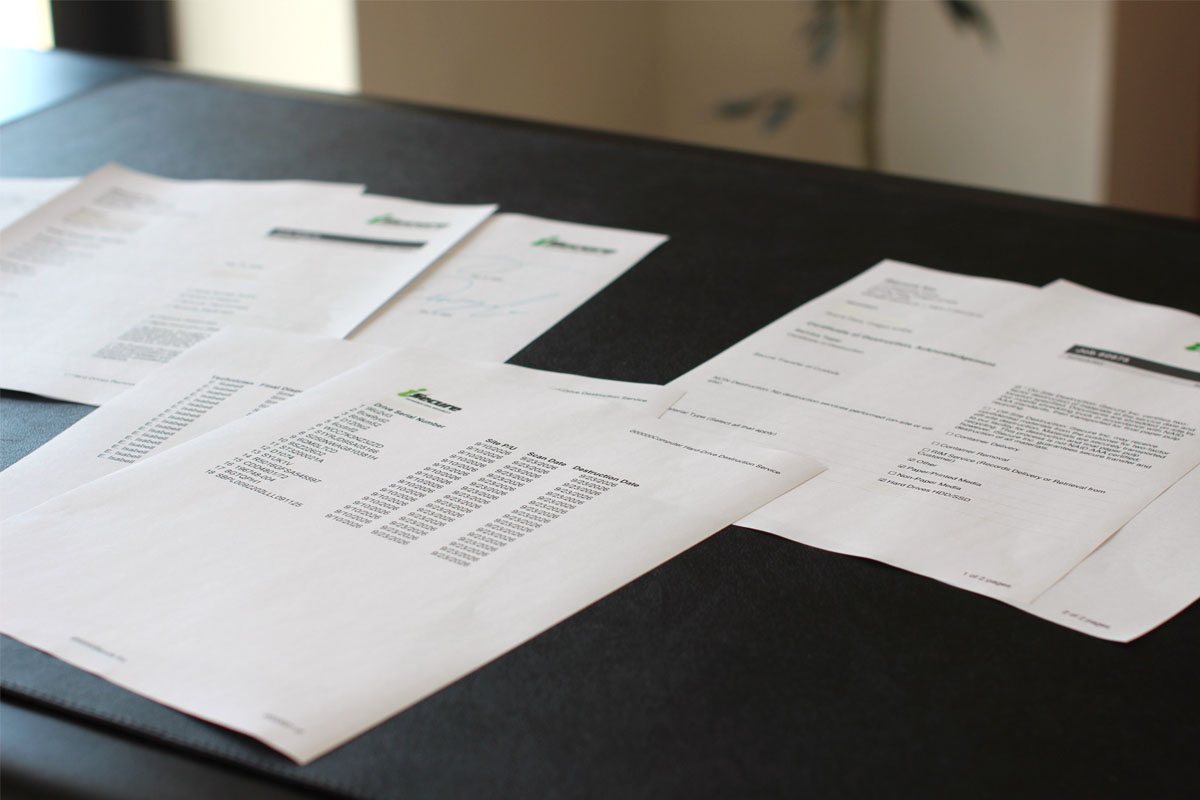
A Certificate of Destruction is an important final record, but it tells only the last part of the story. Secure document shredding and hard-drive destruction begin when sensitive material is identified for disposal, not when it enters the shredder.
A well-documented destruction process should show what was received, who accepted responsibility, how custody was controlled, which assets were processed, and whether the authorized destruction was completed. Together, these records create a traceable chain of custody and help answer an essential question: Can your organization demonstrate what happened to its confidential information?
Documentation Turns a Service Into a Defensible Process
Without supporting records, a business may know that materials were destroyed but have difficulty proving which records or devices were included. That uncertainty can become important during an internal investigation, compliance review, customer inquiry, insurance claim, or audit.
Complete documentation helps an organization:
- Verify that every transferred asset was accounted for
- Establish when responsibility changed hands
- Reconcile destroyed devices with internal asset records
- Confirm that the authorized processing method was used
- Demonstrate vendor oversight and consistent procedures
- Investigate missing equipment or discrepancies
- Maintain evidence after employees or vendors have changed
Documentation does not, by itself, guarantee regulatory compliance. It provides evidence that the organization followed a defined process and helps identify gaps before they become larger problems. That's the difference between a compliance partner and a pickup service.
Current NIST media-sanitization guidance (SP 800-88) emphasizes establishing an appropriate media-sanitization program. Federal healthcare guidance also requires covered entities to maintain policies and procedures addressing the final disposition of electronic protected health information. Review the HHS guidance. Healthcare organizations building out a full program can also read how healthcare companies create compliant data destruction and security programs.
Get Started Today with iSecure Destruction Services!


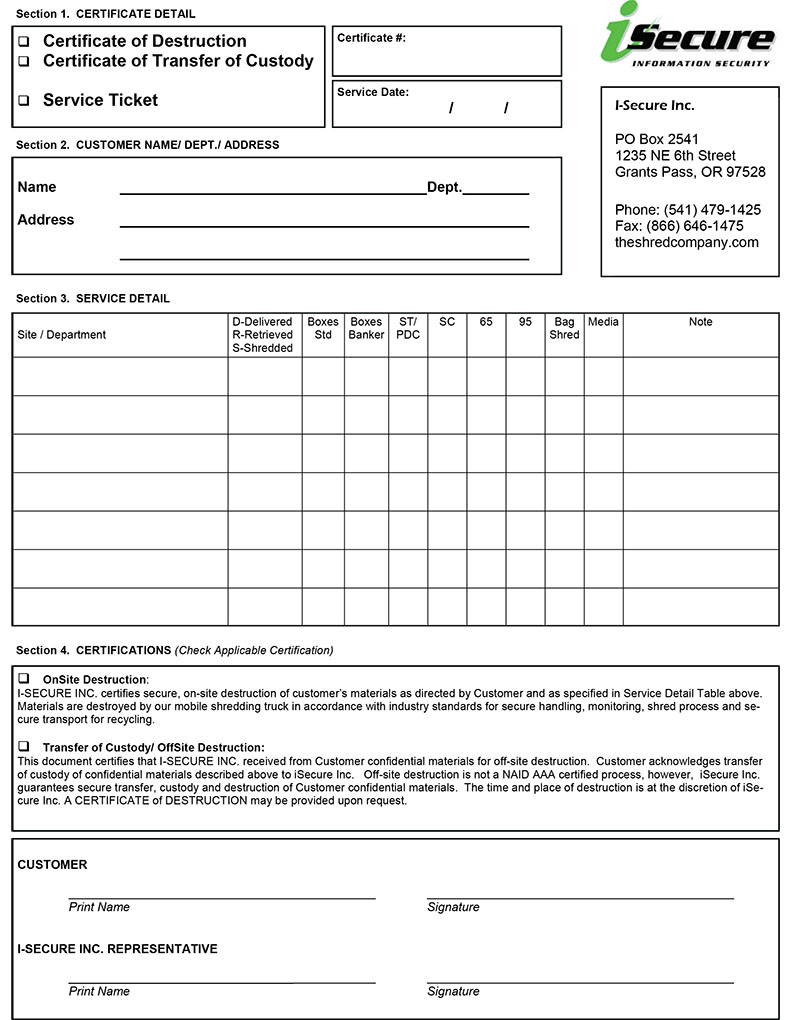
1. Certificate of Destruction
A sample Certificate of Destruction (PDF) records the completion of a destruction service. It may identify the customer, service date, materials processed, destruction method, and responsible service provider.
For recurring document shredding, certificates create a continuing record that scheduled services occurred. This can support privacy policies, retention programs, vendor reviews, and customer requirements.
For hard-drive shredding, the certificate documents that devices reached the final destruction stage. However, it is strongest when connected to earlier records identifying the specific equipment transferred and processed.
2. ITAD Transfer Receipt
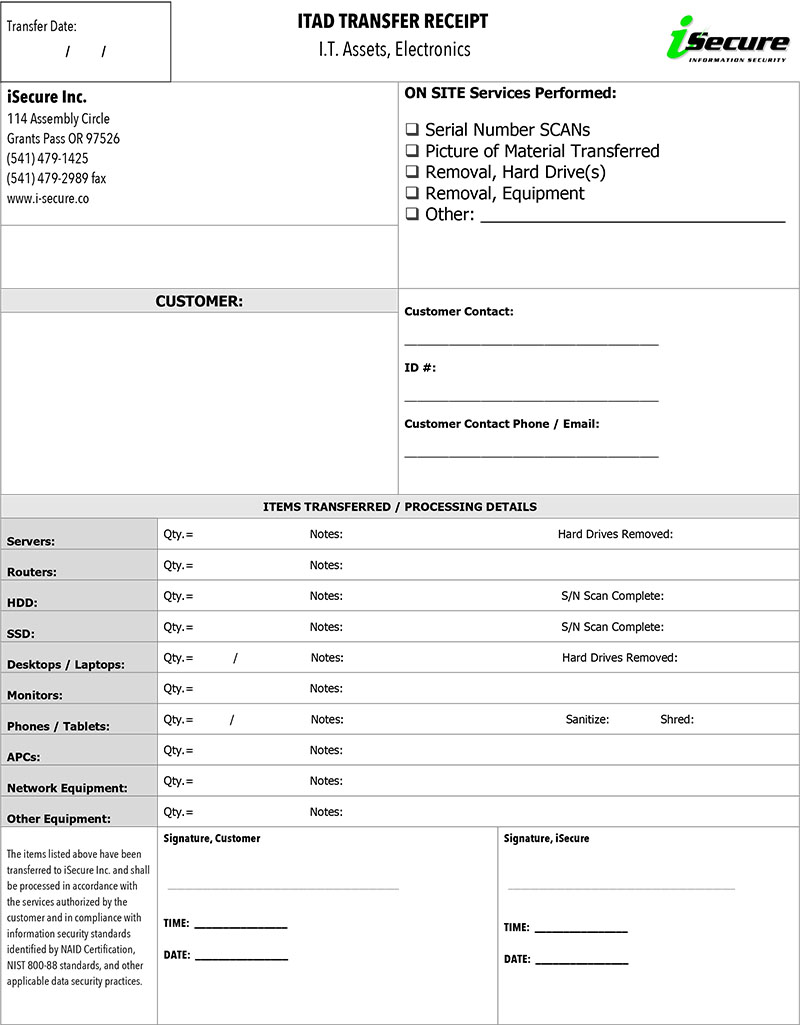
The point at which equipment changes hands is one of the most important moments in an IT asset disposition program.
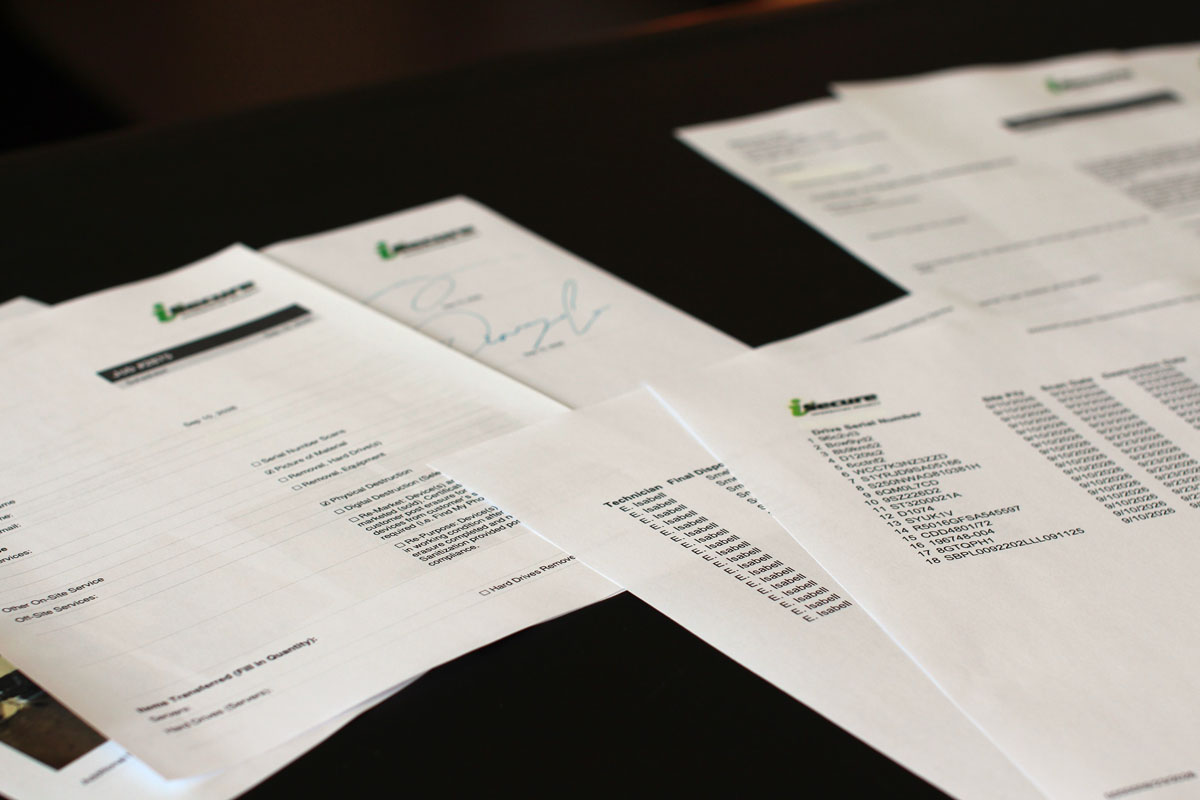
An ITAD Transfer Receipt (PDF) records when iSecure accepts custody of computers, hard drives, solid-state drives, phones, servers, and other electronics. It can document quantities, requested services, onsite work, processing instructions, and the representatives involved in the transfer.
Customer and service-provider signatures help establish mutual acknowledgment of what was transferred. If questions arise later, the receipt provides a starting point for determining what entered the process and when responsibility changed.
3. Hard-Drive Inventory Report
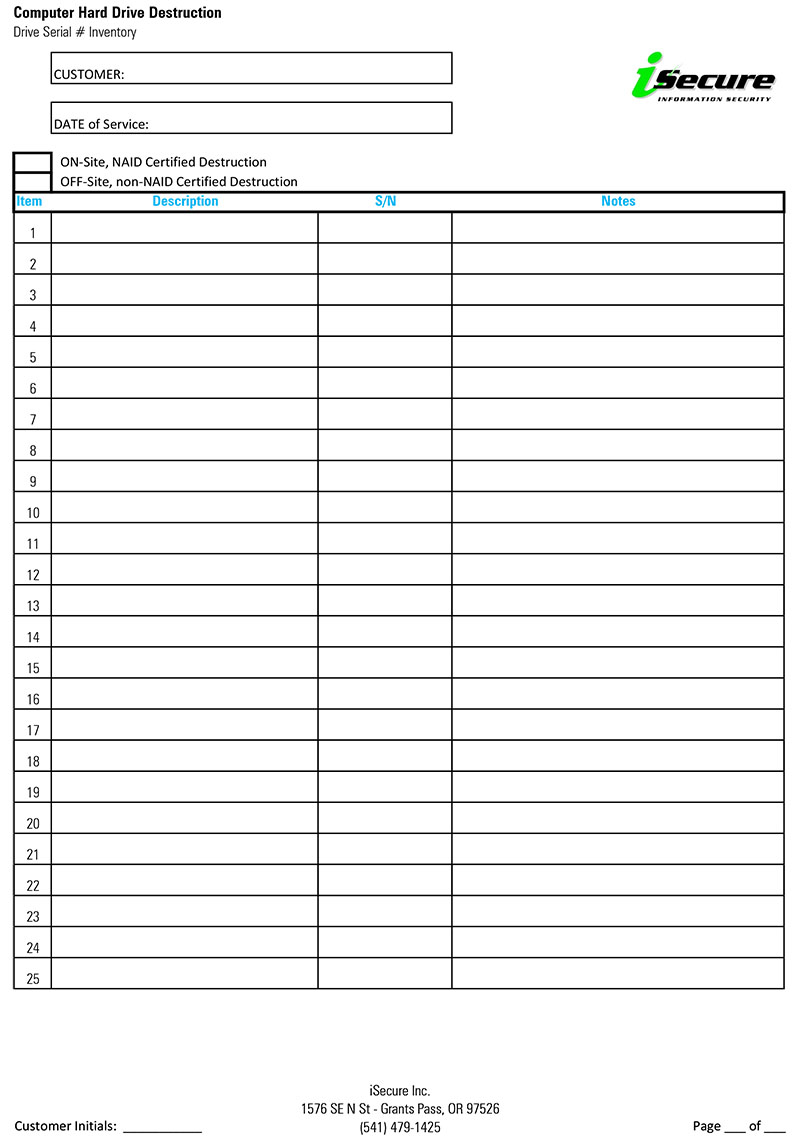
A certificate may confirm that a group of drives was destroyed, but many organizations need device-level accountability.
A Hard-Drive Destruction Inventory (PDF) records individual drive descriptions, serial numbers, and relevant notes. Serial-number documentation connects physical devices to asset-management records and helps prevent a drive from being omitted, duplicated, or mistakenly included.
This is especially valuable when an organization is retiring equipment from multiple departments or locations. The inventory allows IT, compliance, and accounting personnel to reconcile the destruction report with their own records. (New to the process? Start with our guide on how to dispose of old hard drives securely in Oregon.)
Build a Complete Record
The transfer receipt establishes custody. The inventory identifies the assets. The Certificate of Destruction documents completion.
Each record answers a different question. Together, they create a more complete and defensible account of the secure-destruction process.
| Record | Question It Answers |
|---|---|
| ITAD Transfer Receipt | What did we hand over, and when did responsibility change? |
| Hard-Drive Inventory Report | Which specific devices were included? |
| Certificate of Destruction | Was the authorized destruction completed? |
Get a Documented Destruction Process
Contact iSecure to discuss a documented process for securely destroying your organization's paper records, hard drives, and retired IT assets. We serve businesses across Southern and Central Oregon and Northern California.
Call (541) 479-1425 or

About the Author & iSecure Inc. Chris Isabell writes from iSecure, a certified information security company proudly based in Grants Pass, Oregon, since 2005. iSecure specializes in providing document destruction, hard drive destruction, IT asset disposal, recycling, and records management services to practices throughout Oregon and northern California.