
Sensitive information doesn’t stop being sensitive when a file is boxed, archived, deleted, or replaced by new hardware. For businesses and households across Oregon and northern California, secure data destruction turns old records, drives, and devices into a controlled disposal process instead of an avoidable risk. Working with a local provider makes that process easier to schedule, easier to document, and easier to trust.
What Does Safe Data Disposal Include?
Safe data disposal is the secure destruction of paper records, electronic media, hard drives, and IT assets that may contain private, financial, medical, employee, or customer information. It is not the same as tossing documents into a recycling bin or deleting files from a computer. The goal is to make information unreadable, unrecoverable, and properly documented, so your organization can show it handled sensitive material responsibly.
A good disposal plan usually combines several services:
- Document destruction protects printed files, from daily office paper to boxes of archived records.
- Hard drive destruction protects data stored on retired computers, servers, and external drives.
- IT asset disposal manages equipment that is no longer in use, from collection through destruction and recycling.
- Records management and secure storage reduce clutter and keep files protected until they are eligible for destruction.
Why Local Service Fits the Way Our Region Operates
Southern Oregon, the Oregon Coast, Central Oregon, and northern California are not a one-size-fits-all service area. A medical office in Medford may need frequent locked-console service. A law firm in Eugene may need a one-time purge after a retention review. A small business in Yreka, Mt. Shasta, or Crescent City needs a provider that already runs routes through the area, not one coordinating from out of state.
That local presence matters. iSecure is headquartered in Grants Pass and runs scheduled routes across the region: weekly service in communities such as Medford, Roseburg, Eugene, Springfield, and Coos Bay; bi-weekly service in places like Bend, Ashland, Corvallis, and Brookings; and monthly service reaching Klamath Falls, Redmond, Newport, Eureka, and Arcata. See the full schedule on our service area page.
When a provider already has a truck in your area on a regular schedule, you aren’t just buying destruction. You’re getting a team that understands distance, weather, loading areas, and the realities of serving both city offices and remote sites.
Local providers are also easier to reach when plans change. If a storage room fills faster than expected, an employee leaves behind archived files, or a hardware refresh creates a stack of retired drives, responsiveness keeps sensitive material from sitting in back rooms, closets, or desk drawers.
Get Started Today with iSecure Data Services!
What a Local Secure Destruction Provider Offers
National providers can make sense for companies with identical needs across many states. Many regional organizations, though, are better served by a local partner. The difference shows up in everyday details: who answers the phone, how quickly a pickup can be scheduled, and whether pricing is clear before work begins.
Accessibility
You can ask practical questions and get straight answers. Do you need on-site or off-site shredding? Is drop-off available? How should drives be packed? Can a purge be scheduled before an office move? A local provider knows the nearby route, the size of your job, and the best option for your location.
Responsiveness
Responsiveness matters most when disposal is tied to a deadline. A clinic preparing for an audit, a school clearing records, or a financial office retiring workstations can’t plan around vague scheduling windows. Established route knowledge keeps service predictable, including in smaller communities such as White City, Eagle Point, Cave Junction, Sutherlin, Florence, and Gold Beach.
Clear, Volume-Based Pricing
A local provider can quote based on your actual volume, service type, pickup frequency, and location. That makes it easier to compare scheduled service, one-time purge shredding, drop-off shredding, and hard drive destruction without guessing what is included.
Avoid surcharges and variable pricing whenever possible----it makes understanding your costs nearly impossible if your monthly bill is constantly changing. Simple, unit-based pricing is the best option because it’s straightforward and allows you to manage your costs best.
Secure Destruction Options
Different materials require different disposal methods. The right mix depends on your risk level, retention policies, industry requirements, and how quickly sensitive material piles up. (For a deeper side-by-side comparison, see our guide to where to shred documents in Oregon.)
On-Site Shredding
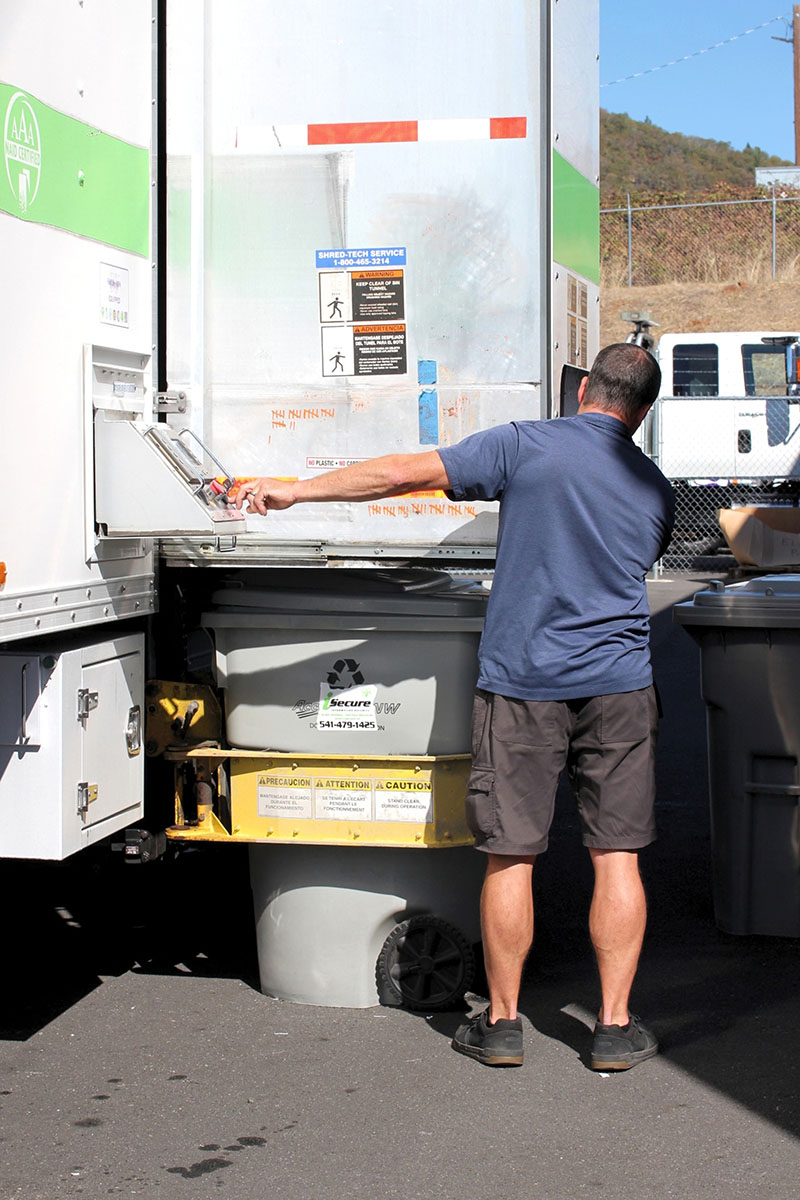
On-site shredding brings destruction to your location. Documents are collected from locked containers and shredded in a mobile shredding truck, so material stays close to your control until it is destroyed. This works well for organizations that want maximum visibility and minimal handling between pickup and shredding.
Off-Site Shredding
Off-site shredding moves locked materials to a secure facility for destruction. It can be a practical choice in locations where mobile shredding isn’t the best fit. The key is documented custody from collection through destruction.
Purge Shredding
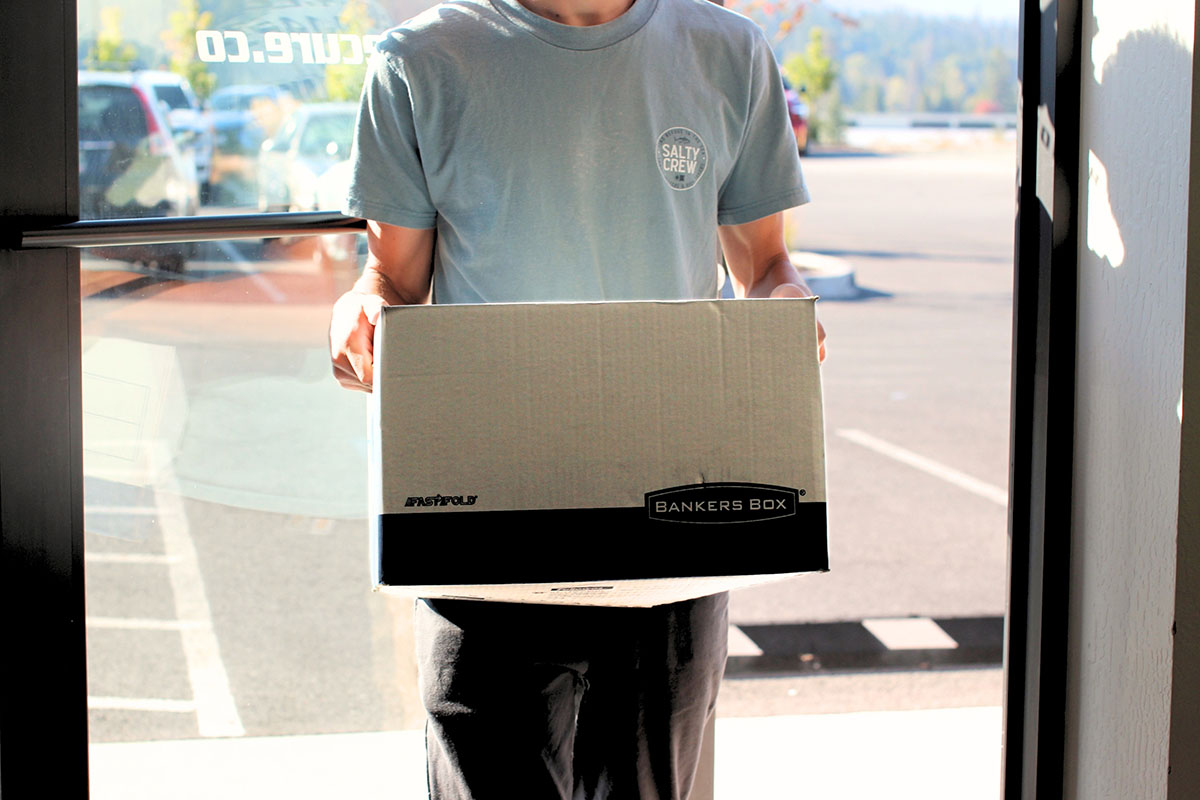
Purge shredding is a one-time cleanout of accumulated records, often after a retention review, an office move, or a merger. Instead of feeding boxes through an office shredder for weeks, a purge handles the full volume in one scheduled service, with documentation to match.
Drop-Off Shredding
Drop-off shredding is useful for households, small offices, and low-volume needs. iSecure’s drop-off location is at our main office, 114 Assembly Circle, Suite C, in Grants Pass, open Monday through Friday, 9 a.m. to 4 p.m. It’s a convenient option for nearby residents and businesses that don’t need a full pickup appointment. Additional drop-off sites are in the works and will be added options on the website in 2027.
Hard Drive and IT Asset Destruction
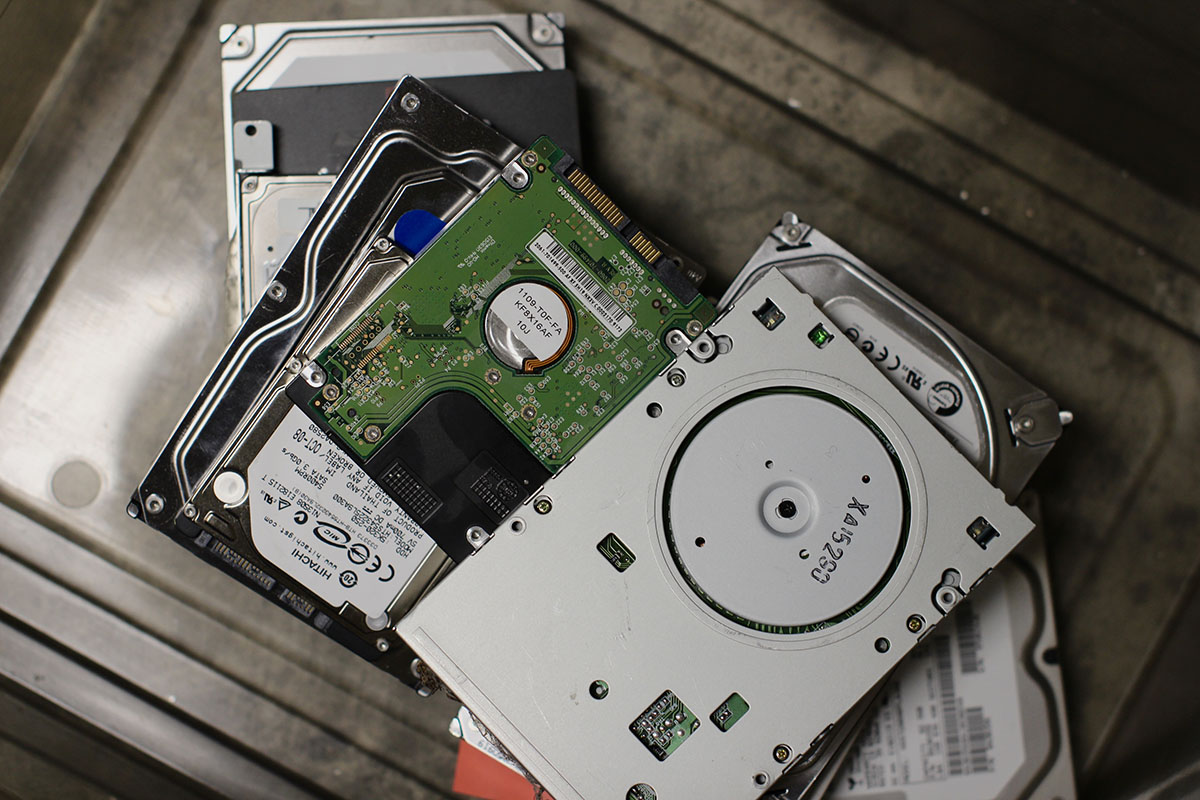
Hard drives, solid-state drives, backup tapes, and other media can retain sensitive information long after files are deleted. Secure data destruction for electronic media has to address the physical device, not just the visible files. For organizations upgrading computers or replacing servers, IT asset disposal reduces the chance that old equipment leaves the building with recoverable data still on it. Our guide on how to dispose of old hard drives securely in Oregon covers the options in detail.
Compliance Starts With a Defensible Process
Compliance is one of the main reasons organizations move beyond office shredders and do-it-yourself disposal. The FTC’s Disposal Rule requires businesses and individuals that use consumer report information to take reasonable measures when disposing of it. The FTC lists shredding paper, destroying or erasing electronic media, and doing due diligence on a destruction contractor as examples of reasonable measures.
Other privacy obligations may apply depending on your industry, including healthcare, finance, education, employment, and government work. A destruction provider can’t replace legal advice, but the right one supports your internal compliance program with secure handling, defined procedures, and records showing when and how destruction occurred. Healthcare organizations can read more about how healthcare companies create compliant data destruction and security programs.
NAID AAA Certification is the data destruction industry’s independent verification standard. According to i-SIGMA, NAID AAA audits verify secure processes, chain of custody, and employee background screening. iSecure is NAID AAA Certified, which is one of the clearest differences between a compliance partner and a pickup service.
Chain of Custody Turns Service Into Proof
Chain of custody is the documented path your material follows from the moment it leaves your control until it is destroyed. Without it, you may know records were picked up but have no way to show how they were protected along the way. With it, you have a clear record of who handled the material, when it moved, where it went, and when destruction was completed.
A strong chain-of-custody process includes:
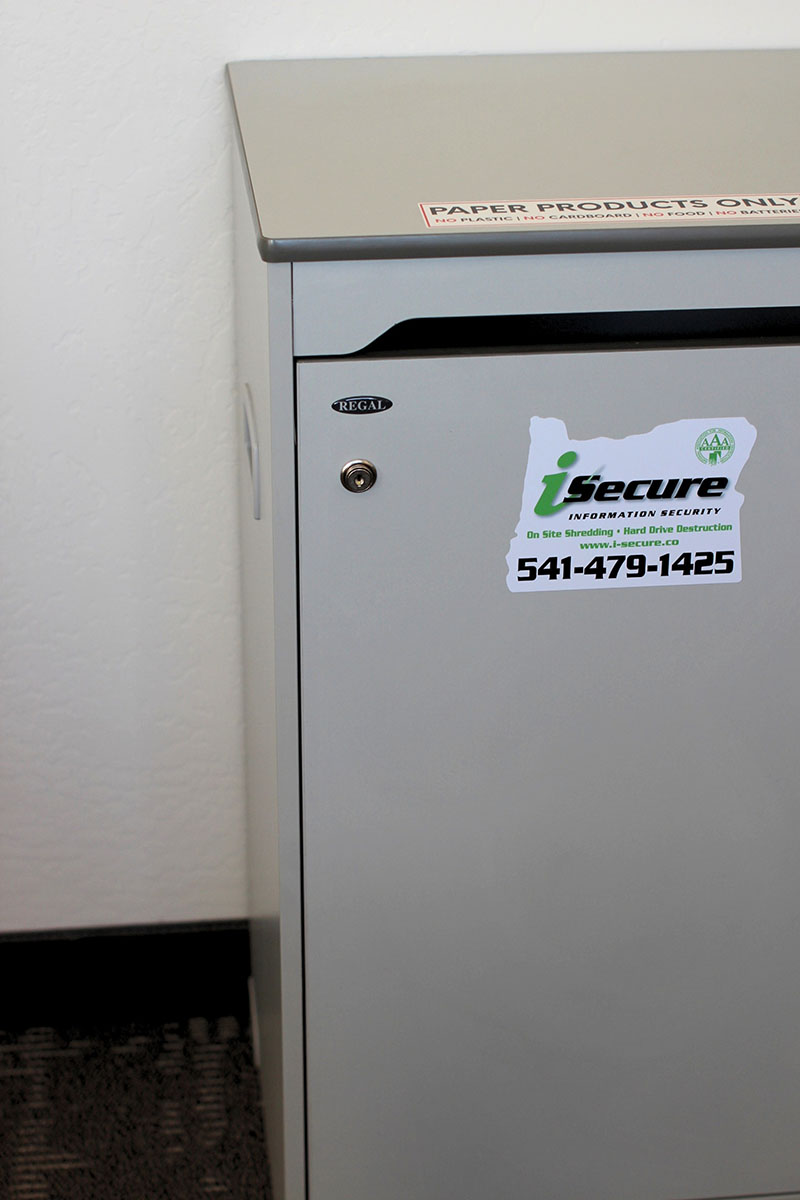
- Locked collection containers in offices, clinics, banks, schools, or storage rooms
- Scheduled pickup by trained, background-checked personnel
- Secure loading and transportation
- On-site shredding or transfer to a secure destruction facility
- Destruction of paper, drives, or media using the appropriate method
- A Certificate of Destruction for your files
That certificate is more than a receipt. It becomes part of your audit trail, vendor management file, or compliance documentation. If a regulator, client, insurer, or executive asks how old records were handled, your answer is stronger when it is backed by documentation instead of memory. For a closer look at the records involved, read Beyond the Certificate: Why Complete Secure-Destruction Documentation Matters.
How to Prepare for a Shredding Pickup
A little preparation keeps the service visit quick and reduces confusion for your staff. You don’t need to over-sort, but you should separate materials by destruction type and confirm special handling instructions before pickup day.
- Identify what needs destruction. Include paper files, folders, hard drives, backup media, ID badges, and devices that may store data.
- Separate paper from electronics. Document shredding and hard drive destruction use different equipment and documentation.
- Remove obvious non-record items. Large binders, trash, food packaging, and unrelated materials slow the process.
- Keep sensitive material secured. Use locked bins, locked rooms, or sealed boxes until pickup.
- Label internal categories if needed. For example: HR, medical, finance, client files, or retired drives.
- Ask what documentation you’ll receive. Confirm your Certificate of Destruction and any serial-number inventory for media.
- Schedule recurring service if material builds up. Regular pickups prevent overflow and remove the temptation to use unsecured recycling.
For multi-location organizations, use the same checklist at every office, whether it’s in Medford, Grants Pass, Roseburg, Eugene, Bend, or Yreka. A consistent process makes training easier and holds every location to the same standard.
Security First, Then Recycling
Security and sustainability don’t have to compete. Shredded paper can be recycled after destruction, and responsible IT asset disposal keeps electronic components out of ordinary waste streams. The order matters: security comes first, and recycling comes after the information is no longer readable or recoverable.
Local service also cuts unnecessary trips. When a provider already serves your area on a regular route, you avoid special runs, long waits, and extra coordination, which is a practical way to support a local business while maintaining your privacy standards.
Frequently Asked Questions
Protect Information All the Way to Final Destruction
Safe data disposal isn’t just an end-of-year cleanup task. It’s part of responsible information management for any organization that handles client records, employee files, financial documents, healthcare information, student records, or retired devices.
Whether you need on-site shredding in Eugene, recurring service in Medford, drop-off in Grants Pass, a purge in Roseburg, IT asset disposal in Bend, or hard drive destruction anywhere from Yreka to Eureka, iSecure is a NAID AAA Certified local partner serving Oregon and northern California since 2005.
Let us know your location and approximate volume, and we’ll give you a straight answer on scheduling and cost.
Call (541) 479-1425 or

About the Author & iSecure Inc. Chris Isabell writes from iSecure, a certified information security company proudly based in Grants Pass, Oregon, since 2005. iSecure specializes in providing document destruction, hard drive destruction, IT asset disposal, recycling, and records management services to organizations throughout Oregon and northern California.